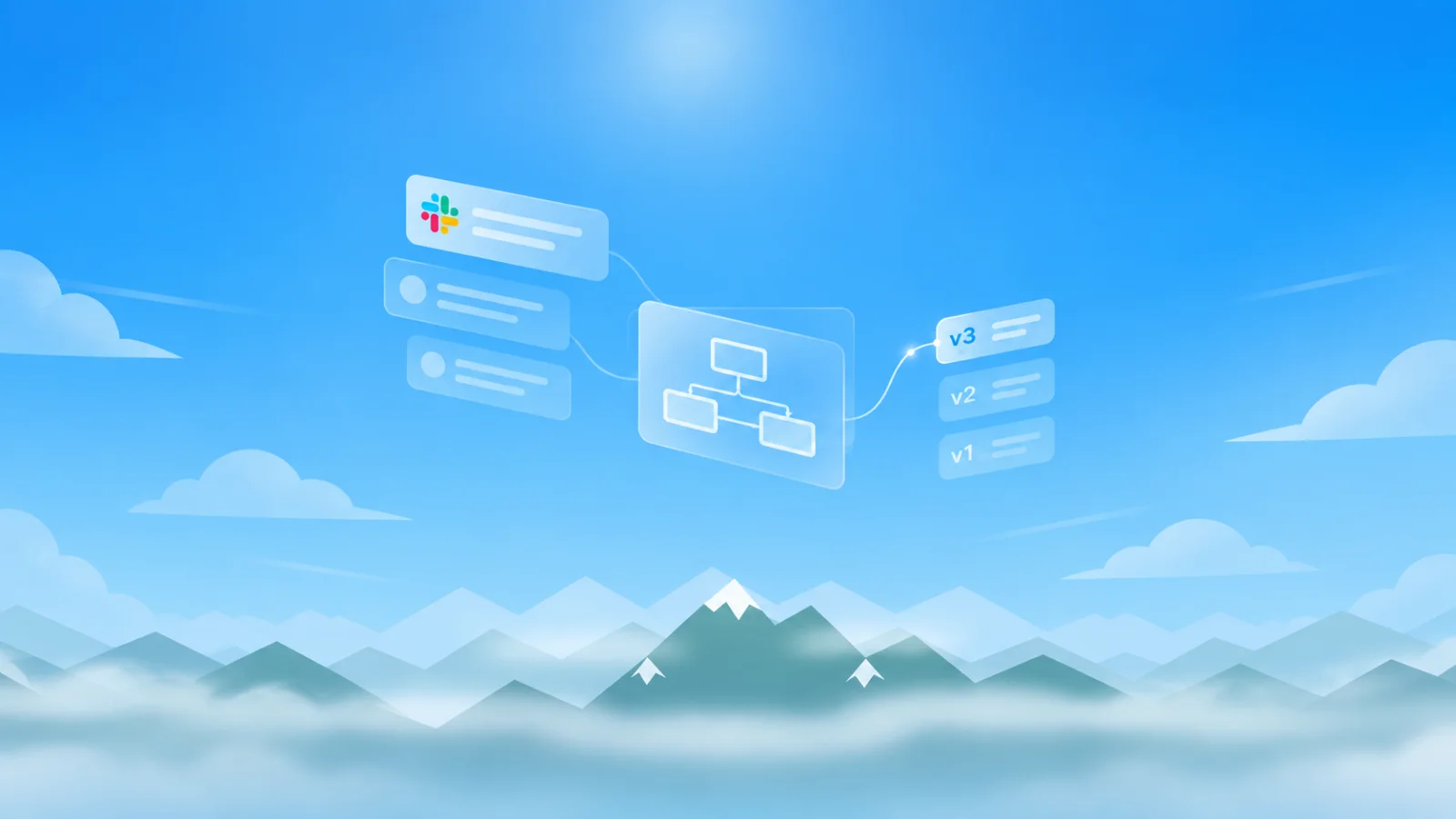
Workflow

Keep the message behind each diagram change

A diagram shows the design; the decision history explains how it changed. Arialine records applied diagram changes with an author, timestamp and source message, and maintains a decision ledger. On Slack Free that ledger lives in the board thread, not the channel's Canvas tab. Use the trail to support architecture documentation; formal ADRs may also need explicit context, consequences, ownership and approval.

1Keep the change connected to its context

A decision trail supports an ADR. It does not write the whole record.

Imagine reviewing a retry queue six weeks after adding it. The diagram alone says what exists. Its recorded change and source message help you investigate why.

What to inspect: the recorded change, author, version and linked source message. Preserve the source discussion rather than treating an AI summary as the final architectural decision.

Thread · checkout-review
Sam Rivera9:05 AM
@Arialine add a retry queue before the worker because fulfillment can fail after payment succeeds
ArialineAPP9:06 AM
v2 — Added a retry queue between Payment processor and Fulfillment worker — by @Sam Rivera (source message)
2Inspect the recorded reasoning

Every element links back to the request that shaped it

Open the version's HTML file and select a node: the Decisions panel filters to the changes that touched it, with the quoted request and a link to the Slack message.

Start with an explicit invocation. The selected-message shortcut does not automatically recover an entire historical thread. Read the decision-ledger guide.

Arialine HTML diagram Decisions panel showing recorded changes and source links
3Formal ADR handoff

Add the deliberation your team needs

  • Context and constraints that led to the decision
  • Alternatives considered and their tradeoffs
  • Consequences, owner and acceptance status
  • Links to the relevant diagram version and source discussion
FAQ

Frequently asked

Is this a replacement for formal ADR documents?+

The ledger records diagram changes and their provenance. A formal ADR can require context, consequences, decision status and approval beyond that trail. Use the ledger as evidence alongside your team's ADR process rather than assuming it completes the process.

Who can see the ledger?+

A standalone ledger Canvas is shared with the channel where Slack permits it. On Slack Free, the ledger message is in the board thread. Normal Slack conversation and Canvas permissions apply.

Does it work retroactively on old threads?+

The 'Render as diagram' shortcut uses the selected message and supported attachments to create a board. It does not automatically reconstruct the whole historical thread or recover decisions that were never recorded. Subsequent applied board changes get a version trail.

Try it in your workspace

Every feature is included in Free, with up to 3 boards and 10 AI generations per workspace each day. Model-free actions do not use that daily allowance. Workspace approval may be required.